Accelerated vehicle durability testing serves as a rigorous proving ground for evaluating the reliability of vehicle bodies and chassis components. Harsh durability tracks featuring potholes, bumps, twist sections, undulations, washboard surfaces, and cobblestones continuously subject vehicles to impact loads, reproducing the extreme damage conditions encountered during real-world vehicle operation.
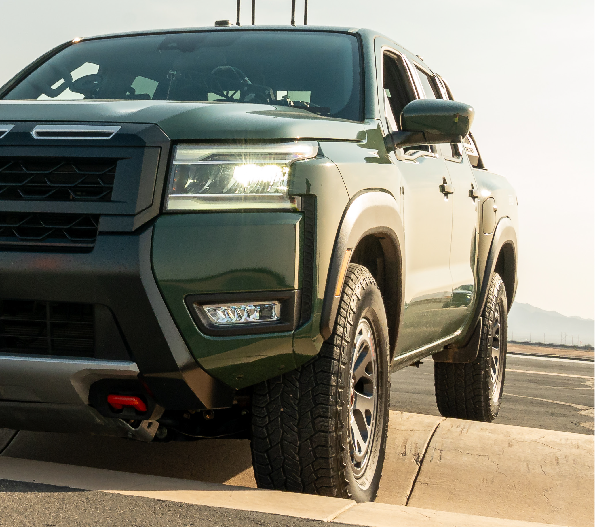
Traditional durability testing relies heavily on human drivers repeatedly completing test cycles. However, driver fatigue, variations in driving behavior, and limitations on continuous operation have long affected testing efficiency and data consistency.
With the AB Dynamics Automated Driverless Testing System, robotic driving systems replace human drivers to perform fully automated durability testing on off-road and accelerated durability tracks.
This approach addresses many challenges associated with conventional testing by ensuring highly repeatable vehicle speeds, driving trajectories, and control inputs across test cycles. It improves load consistency, enables 24-hour continuous testing, and significantly reduces vehicle durability validation timelines.
1. Challenges in Accelerated Durability Testing: Repetitive Driving with Complex Variables
Accelerated durability tracks combine demanding road surfaces, including potholes, bumps, twist sections, undulations, washboard surfaces, and cobblestones.
The primary objective is to reproduce the severe impact loads experienced by vehicle bodies, suspension systems, steering systems, and other chassis components under real-world operating conditions, allowing engineers to evaluate component fatigue and durability performance.
Although durability testing may appear to involve nothing more than repeatedly driving around a test track, it actually requires strict consistency in vehicle speed, driving trajectory, and driver control inputs.
Traditional human-driven durability testing presents two major challenges.
1. Driver Fatigue and Human Variability Affect Data Consistency
Different drivers naturally have different acceleration, steering, and braking habits. Even the same driver may gradually change their driving behavior after prolonged exposure to severe vibration and repeated impacts.
Small variations in vehicle speed, driving trajectory, or control inputs can alter the impact loads experienced by the vehicle and its components.
These variations directly affect the comparability of test results and introduce unwanted human-related variables into subsequent fatigue and durability analysis.
2. Harsh Testing Conditions Affect Driver Health and Limit Operating Hours
Accelerated durability tracks generate severe and continuous vibration, placing considerable physical strain on test drivers, particularly on their spines and joints.
Due to physical endurance limitations, drivers cannot operate continuously for extended periods and require frequent breaks or shift changes.
This prevents uninterrupted day-and-night testing and extends the overall vehicle development and durability validation process.
Engineers need to accurately reproduce damage-inducing loads on accelerated durability tracks based on real-world road load data. However, the uncertainty introduced by human driving can significantly reduce the accuracy and repeatability of load reproduction.
2. AB Dynamics Automated Driverless Testing: Robots Take Control of Durability Testing
The AB Dynamics Automated Driverless Testing System combines advanced driving robot hardware with an integrated software ecosystem to transform conventional test vehicles into automated platforms capable of completing repeated durability cycles on accelerated durability and off-road tracks.
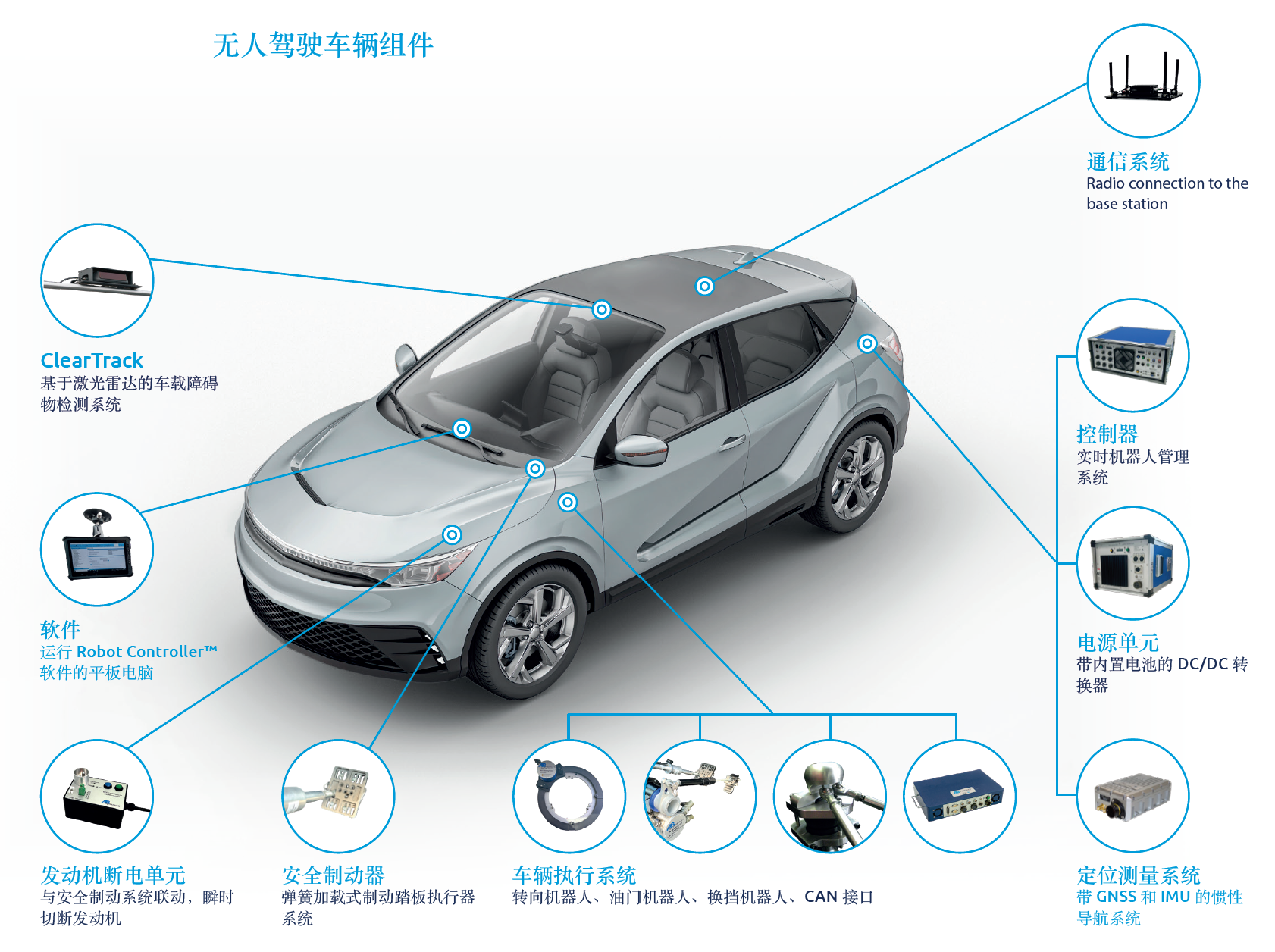
Three Core Components of the System
1. Driverless Test Vehicles
Test vehicles are equipped with robotic actuators, including steering robots, accelerator robots, gearshift robots, and safety braking systems. Alternatively, the Flex 0™ drive-by-wire system can be used.
The hardware can be installed without permanent vehicle modifications, enabling rapid deployment. A robotic driving system can be operational in as little as 2 hours, while the Flex 0 drive-by-wire system can be installed in approximately 30 minutes.
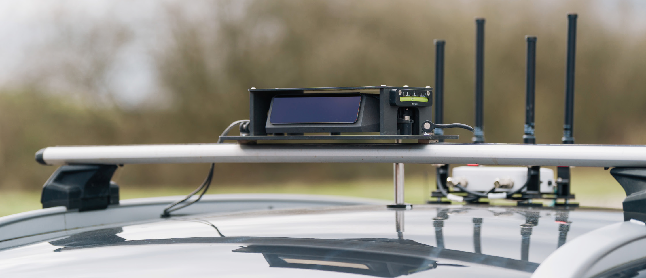
Vehicles can also be equipped with the optional ClearTrack™ LiDAR obstacle detection system, which identifies road debris and unexpected obstacles during durability testing and automatically initiates braking when necessary. This helps protect test vehicles and reduce unplanned interruptions.
Additional onboard components include a GNSS/IMU positioning and inertial navigation unit, vehicle controller, power supply unit, and engine shutdown unit.
Together, these components support accurate execution of driving commands and enable emergency engine shutdown and braking in the event of a fault.
2. Base Station Control Platform
GTC™ Pro serves as the central control and monitoring platform for the entire testing operation.
Operators can remotely monitor fleet status, initiate a system-wide emergency stop, and manually take control when necessary.
Using GNSS positioning data, the platform continuously monitors vehicle locations and incorporates collision detection and geofencing functions to establish safe operating boundaries for durability testing.
A single system can simultaneously manage more than 30 test vehicles, allowing an entire fleet to be supervised by just one or two operators.
3. High-Performance Mesh Communication Network
A reliable wireless mesh network provides low-latency, encrypted communication between the base station and multiple test vehicles.
This ensures stable transmission of control commands and testing data throughout demanding durability testing operations.
Integrated Software Ecosystem for the Complete Testing Workflow
1. Scenario Generator™
Enables engineers to plan durability testing routes, define road-specific trigger conditions, and configure vehicle control actions in advance.
Test scenarios can be simulated before execution, organized into reusable scenario libraries, and distributed to multiple test vehicles.
2. Robot Controller™ (RC)
Precisely executes predefined durability test procedures by coordinating vehicle actuators and reproducing specified speeds, steering inputs, acceleration, and braking actions.
3. GTC™ Pro
Provides centralized monitoring and control of test execution, including real-time operating status, fault alerts, and comprehensive safety management.
4. AB Grapher™
Supports post-test data visualization and analysis, helping engineers evaluate damage and fatigue performance of vehicle body and chassis components.
By integrating hardware and software into a coordinated system, complex durability testing cycles can be transformed into a streamlined, automated testing process.
3. Key Benefits of Automated Durability Testing
Eliminating Human Variability for Highly Repeatable Load Reproduction
Unlike human drivers, robotic driving systems are unaffected by fatigue or individual driving habits.
The system delivers precise vehicle control with the following performance specifications:
Position accuracy: ≤ 2 cm
Speed accuracy: ≤ 0.5 km/h
Steering angle accuracy: ≤ 0.5°
When repeatedly driving over washboard, cobblestone, and twist sections, the system consistently reproduces vehicle trajectories, speeds, and accelerator and brake inputs.
This helps maintain stable and controlled impact loads on the vehicle body, suspension, and steering systems throughout successive test cycles.
As a result, differences in test outcomes can be more directly attributed to component behavior rather than variations in driver input, substantially improving test data comparability and enabling more accurate fatigue damage assessment.
Protecting Test Personnel from Harsh Driving Conditions
The severe vibrations and impacts generated by accelerated durability tracks can place significant physical stress on human drivers.
By replacing human drivers with robotic driving systems, test personnel can remain outside the vehicle and supervise testing operations from a safe control station.
This eliminates direct driver exposure to prolonged vibration during automated testing and enables engineers to conduct more demanding durability tests without subjecting personnel to harsh driving conditions.
24-Hour Continuous Operation to Shorten Development Cycles
Automated test vehicles can continuously repeat durability testing cycles day and night, with interruptions primarily limited to refueling, charging, or necessary maintenance.
Eliminating driver shift changes and rest periods accelerates mileage accumulation and fatigue damage testing, directly reducing the time required for vehicle durability validation.
The system also supports intelligent automated operation.
Vehicles can independently complete predefined durability routes and return to designated service areas when fuel or battery levels become insufficient.
With multi-vehicle operation, multiple prototypes can undergo durability testing simultaneously, enabling parallel testing and comparative evaluation.
Multiple Layers of Safety Protection for Continuous Testing
To support demanding 24/7 durability testing operations, the system incorporates multiple safety mechanisms.
1. Hardware Safety
Redundant safety braking systems, engine shutdown units, and watchdog circuits enable rapid and controlled vehicle stopping in emergency situations.
2. Operating Boundaries
Geofencing defines permitted testing areas, while configurable speed limits help prevent vehicles from leaving designated test routes.
3. Real-Time Monitoring
Onboard diagnostic systems continuously monitor positioning performance and actuator operation to identify potential abnormalities.
4. Collision Prevention
The system incorporates path-based vehicle-to-vehicle collision detection. With the optional ClearTrack™ LiDAR system, vehicles can also detect unexpected road obstacles and initiate appropriate avoidance or stopping actions.
5. Secure Communication
Encrypted wireless communication helps protect the testing process against unauthorized interference and ensures reliable exchange of control commands and vehicle data.
4. Wide Vehicle Compatibility and Global Industry Adoption
AB Dynamics driving robot systems can be adapted to a broad range of vehicle types, including passenger cars, off-road vehicles, and heavy-duty commercial vehicles, making them suitable for accelerated durability and off-road endurance testing.
To date, more than 2,200 systems have been deployed worldwide, with solutions widely adopted by major automotive manufacturers, Tier 1 suppliers, and independent testing organizations.
From solution planning and hardware installation to on-site commissioning and operator training, AB Dynamics and its Chinese partner, Guangzhou ZEER Testing Technology Co., Ltd., provide comprehensive support throughout project implementation.
"This is a truly innovative way to conduct race car safety testing. The data we're getting from these tests is incredibly valuable and something we can't get from other crash testing facilities."
— John Patalak, Vice President of Safety Engineering, NASCAR
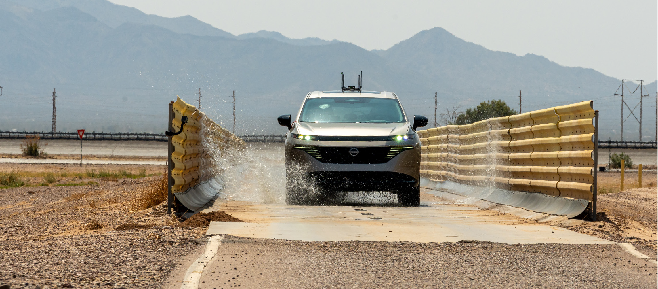
Vehicle body and chassis durability validation forms the foundation of automotive product reliability.
When repeated testing on pothole, washboard, and cobblestone tracks no longer requires human drivers to endure continuous impacts, automated robotic systems can maintain consistent load reproduction while improving testing efficiency, data quality, and personnel safety.
As automotive development cycles continue to accelerate, automated driverless durability testing is becoming an important direction for the modernization of vehicle proving grounds.
For more information about AB Dynamics Automated Driverless Durability Testing Solutions, please contact Guangzhou ZEER Testing Technology Co., Ltd.